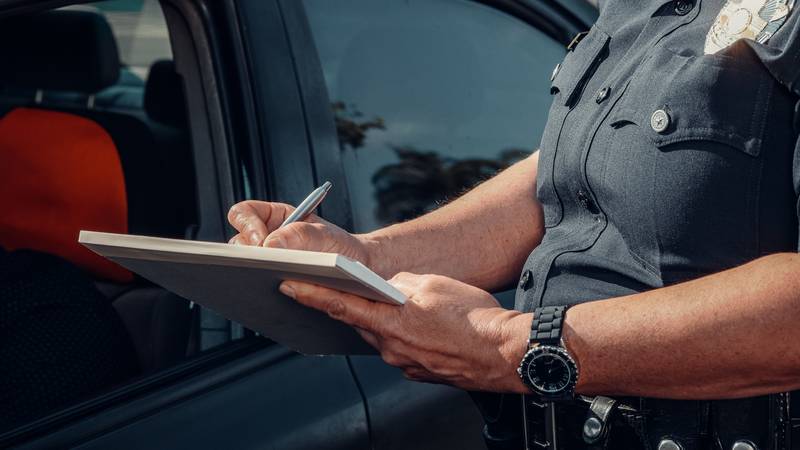
You get pulled over on a trip, accept a ticket from an officer in another state, and then spend the rest of the drive home wondering whether that slip of paper can really follow you back to Virginia. Once you are back in Fredericksburg or elsewhere in the Commonwealth, the ticket may feel like a distant problem that belongs to the state where you were stopped, not to your life at home. That feeling is understandable, but it can be dangerously misleading.
Out-of-state traffic tickets sit in an awkward middle ground. The stop happened somewhere else, but your license, insurance, job, and family are here in Virginia. Many drivers assume that if they simply pay the fine online, or if they ignore the ticket and never drive through that state again, it will not matter much. Others worry that the ticket will automatically wreck their record and insurance, without understanding how or when that might happen.
In reality, many states, including Virginia, share traffic conviction information. Virginia DMV typically receives notice of many out-of-state convictions and then decides what to do under Virginia law, including adding demerit points to your Virginia record. At Butler Moss O'Neal, PLC, we work every day within Virginia’s court system and see how driving records and license status can ripple into issues like employment, support, and parenting time. In this guide, we explain how out-of-state traffic tickets interact with Virginia law so you can make informed decisions instead of guesses.
Facing an out-of-state traffic ticket? Schedule a consultation today to understand how it could affect your Virginia license, points, and insurance. Call (540) 306-5780 or book online.
Why Out-of-State Traffic Tickets Still Matter for Virginia Drivers
Many Virginia drivers come home from a trip and quietly hope that an out-of-state ticket will stay where it started. They assume that, because the stop happened in another jurisdiction, the consequences will not reach their Virginia license. Some even believe that if they avoid returning to that state, the ticket will never catch up with them. These are common assumptions, and they are wrong often enough to cause real problems.
States now routinely share traffic conviction information, especially for moving violations. That means the outcome of a ticket in North Carolina, Maryland, or another state is not locked inside that state’s system. Once there is a conviction, often through a guilty plea or payment of the ticket, the issuing state can report the conviction to your home state. For a Virginia driver, that home state action runs through the Virginia DMV, not the court where you were stopped.
From your point of view, the question is simple. Can this out-of-state ticket lead to points, a license suspension, higher insurance, or trouble in court back in Virginia? In many situations, the answer is yes. Even if a particular ticket is minor, a string of out-of-state convictions can combine with your Virginia history in ways that affect your ability to drive, your premiums, and sometimes your credibility in unrelated proceedings, such as custody disputes or support enforcement hearings.
Understanding that the ticket can matter is the first step. The next question is how the information gets from that other state to Virginia and what Virginia does with it. That process is not random. There is a system behind it, and knowing the outlines of that system helps you decide what to do.
How Other States Share Your Ticket With Virginia
When you resolve a traffic ticket in another state, whether by paying it, entering a plea, or being found guilty in court, that outcome does not stay on a scrap of paper. The court or agency in the issuing state typically enters the conviction into its system. For drivers who live elsewhere, many of those states then send notice of the conviction to the driver’s home state motor vehicle agency. For you, that means the Virginia DMV in Richmond.
Virginia participates in interstate information-sharing arrangements that serve a similar function to the Driver License Compact. The basic idea is simple. States agree to tell a driver’s home state about certain traffic convictions so that the home state can act on them under its own laws. The issuing state reports the type of violation and other key details. Virginia then reviews that information and matches the out-of-state offense to the closest Virginia equivalent.
This matching step is important because Virginia does not simply copy the other state’s point system. Instead, Virginia looks at the description of the offense and determines how it would be treated if it had occurred on a road in the Commonwealth. For example, if another state reports a moving violation similar to speeding at a particular speed over the limit, Virginia DMV may treat that as a Virginia speeding offense and assign points based on Virginia’s schedule.
Reporting does not always happen overnight. It often takes days or weeks for the issuing state to process the conviction and send notice, and then more time for Virginia DMV to update your record and, in some cases, issue its own letter. That delay can lull drivers into a false sense of security. They pay a ticket online while on vacation, see no immediate change at home, and assume the matter is finished. Only later, sometimes when they receive a DMV notice or an insurance renewal, do they realize that Virginia has acted on the out-of-state conviction.
What an Out-of-State Ticket Can Do to Your Virginia License
Once Virginia DMV receives an out-of-state conviction and matches it to a Virginia offense, it decides how to treat it under Virginia law. In practice, that often means assigning demerit points to your Virginia driving record. Virginia uses its own point system, and different types of violations carry different point values and stay on your record for varying lengths of time.
For many common moving violations, such as modest speeding, Virginia may treat an out-of-state ticket the same way it would treat a similar Virginia ticket. If you are convicted of speeding in a neighboring state at a low threshold over the limit, Virginia DMV may assign a point value that aligns with its own schedule, then add that to whatever points you already have. If your record is otherwise clean, the additional points may be inconvenient but manageable. If you are already close to a threshold, however, those extra points can matter.
More serious out-of-state offenses raise the stakes. Convictions that would be criminal matters in Virginia, such as reckless driving or driving under the influence, can have serious repercussions once they are reported to Virginia. In some circumstances, an out-of-state DUI or reckless driving conviction can contribute to a suspension or revocation of your Virginia driving privilege or trigger requirements such as alcohol education, ignition interlock, or driver improvement courses. The details depend on the exact offense, your prior record, and how the other state reports the conviction.
Insurance is another layer. Insurers typically review your driving record when setting premiums, and they generally do not care whether points came from tickets in Spotsylvania County or another state. A conviction that Virginia DMV logs on your record can contribute to higher premiums, nonrenewal, or changes in coverage. For a driver in the Fredericksburg area who relies on a car to get to work at Quantico, Dahlgren, or a federal office in Washington, that can create real financial strain and make already complex family logistics even harder.
From our vantage point at Butler Moss O'Neal, PLC, we often see how a driving record that looks like “just a few tickets” can complicate larger legal issues. Missed work due to license problems can affect income for support calculations. A pattern of unsafe driving can become an issue in custody disputes. Although an out-of-state ticket may seem unrelated to those matters, once Virginia incorporates it into your record, it can become part of the broader story that courts and agencies see.
Why Ignoring an Out-of-State Ticket Is Usually the Worst Choice
Because the stop happened in another state, some Virginia drivers are tempted to do nothing and hope the matter disappears. They reason that if they are not returning to that state, they do not really care what happens there. That approach can feel appealing in the moment, especially when travel back to that jurisdiction is expensive or inconvenient. Unfortunately, it often turns a manageable problem into a much larger one.
If you ignore a ticket that requires a response, the court in the issuing state generally does not forget about you. Depending on that state’s laws and procedures, failing to respond can lead to a default conviction, additional fines and fees, or a designation that you failed to appear. In some cases, the court may issue a warrant for your arrest. The exact mechanism varies by state and by type of offense, but in many places, unpaid or unresolved tickets produce their own separate violations.
Once the issuing state classifies your case as unpaid or unresolved, its motor vehicle agency can suspend or restrict your ability to drive there. That information may then be reported to Virginia, not as an original speeding ticket, but as a failure-to-comply issue. Virginia DMV can react to that information by placing a hold or suspension on your Virginia license until the underlying out-of-state problem is cleared. Drivers sometimes only discover this after a routine traffic stop in Virginia when an officer tells them their license is not valid.
Ignored tickets have a way of resurfacing at bad times. A warrant from another state can complicate travel, military deployment, or clearance reviews. A suspended license tied to an out-of-state compliance problem can cause missed work, missed visitation exchanges, or violations of court orders that assumed you would be able to drive. By the time those secondary problems appear, fixing the original ticket usually involves more time, money, and legal complexity than it would have if you had responded promptly.
We have seen how long-ignored traffic issues from other states can suddenly collide with active Virginia matters. That is why our consistent advice is to treat an out-of-state ticket as a real legal obligation that requires a deliberate response. You may ultimately decide that paying the fine is the right call, but that should be a choice made with an understanding of the risks, not a default born of wishful thinking.
Handling the Ticket: Pay, Contest, or Get a Lawyer Involved
Once you accept that an out-of-state ticket can affect you in Virginia, the practical question becomes how to handle it. Most drivers see two basic options: pay it or fight it. In truth, there is a third component, which is understanding when to involve legal counsel and in which jurisdiction. The right path depends on the seriousness of the charge, your driving history, and the broader context of your life and legal obligations.
For relatively minor moving violations where the ticket clearly allows payment by mail or online, promptly resolving the ticket may be reasonable. If your driving record is otherwise clean and the offense is the sort of speeding or equipment violation that Virginia would normally treat as a lower-point infraction, accepting the conviction might only result in modest points and possible insurance changes. Even then, you should still consider the cumulative effect if you have other tickets on your record.
By contrast, there are circumstances where fighting or negotiating the ticket deserves serious consideration. Charges that would amount to criminal offenses in Virginia, such as reckless driving at high speeds, DUI, or driving on a suspended license, carry risks that go far beyond a fine. If a conviction for that out-of-state charge is reported back to Virginia, it can contribute to license suspensions, harsher insurance treatment, and serious collateral consequences for employment and family matters. In these cases, it is often wise to consult both an attorney in the state where the ticket was issued and a Virginia attorney who can help you understand the home-state impact.
Jurisdiction is a key practical reality. A Virginia lawyer cannot walk into a court in another state unless licensed there, and some out-of-state courts require your personal appearance for certain offenses. At the same time, a lawyer in the issuing state may not be focused on the downstream effects on Virginia DMV, your security clearance, or your ongoing family case in the Fredericksburg Circuit Court. The most informed decisions usually come when you coordinate advice, so you understand both the options in the issuing court and the consequences in Virginia.
At Butler Moss O'Neal, PLC, our work is centered in Virginia courts, where we bring over 100 years of combined experience in litigation and negotiation. That background matters when a traffic issue intersects with larger legal questions, such as how a license suspension might affect your ability to meet custody schedules or maintain income for support. We are used to weighing tradeoffs, not just in terms of fines and points, but in terms of how each choice fits your broader strategy and obligations.
Special Concerns for Military, Federal, and Professional Drivers
In the Fredericksburg and Rappahannock region, many clients work in roles that carry additional scrutiny. Service members stationed at Quantico or other installations, federal employees, and contractors who commute to Washington, and professionals whose work involves significant driving, all live with expectations that go beyond simply keeping a license valid. For these drivers, an out-of-state traffic conviction can have consequences that are not immediately obvious from the face of the ticket.
Security clearances and certain federal or military positions may take a broader view of judgment and compliance, including patterns of traffic convictions, alcohol-related offenses, or ignored court obligations. A DUI or serious reckless driving conviction in another state, once reported to Virginia and visible on your record, can trigger questions that affect career paths or assignments. Even when a single ticket does not cross a formal threshold, a broader pattern of driving issues may become part of clearance reviews or internal evaluations.
Commercial drivers and those whose employment depends on driving often face employer policies that react strongly to certain types of convictions. A suspension or even a temporary restriction on your ability to drive in another state can interfere with routes, deliveries, or client work. When that information reaches Virginia and affects your home-state license, it can jeopardize both your current job and future opportunities in the same field.
The impact is not just professional. A suspended or heavily restricted license can make it difficult to comply with custody arrangements, parenting plans, and support obligations that assume you can transport children or travel to work. Missed visits or lost income have a way of showing up in family court disputes later, sometimes long after the original ticket was issued. From our perspective as a family law firm, we pay close attention to how traffic issues might ripple into custody, support, and equitable distribution matters.
Because Butler Moss O'Neal, PLC works closely with clients who have high-value assets, federal or military pensions, and complex family responsibilities, we are attuned to these intersections. When a client with a clearance or a professional license receives an out-of-state ticket, we help them think beyond the fine and look at how the choices they make now may protect or complicate their long-term plans.
Practical Steps to Take After an Out-of-State Ticket
Once you are back in Virginia and have had a chance to breathe, it helps to turn a vague worry into a concrete plan. There are practical steps you can take that reduce the risk of unpleasant surprises and put you in a better position to make informed decisions. These do not require legal training. They simply require attention and follow-through.
Start by reading the ticket carefully. Confirm the exact charge, the location, and whether the ticket specifies a mandatory court appearance or offers options for payment by mail or online. Note any deadlines printed on the ticket, including response dates and court dates. If the writing or abbreviations are unclear, the court’s website in that state often has an explanation of common codes and procedures.
Next, gather information about your situation at home. Check your current Virginia driving record if you have concerns about existing points or prior suspensions. Review your insurance policy, especially if you have had recent claims or rate changes. If you are involved in an ongoing family law matter, such as a custody case in Fredericksburg or Stafford, consider how a license issue might affect your ability to comply with existing court orders or parenting plans.
With that information in hand, you can have a more productive conversation with counsel. In some cases, you will need to consult an attorney in the state where the ticket was issued to understand the local law, potential reductions, and whether a lawyer can appear on your behalf. At the same time, speaking with a Virginia attorney can help you understand how different outcomes might affect your record, license, and related legal obligations here. Coordinating those pieces before you make a decision can prevent avoidable complications later.
Our role at Butler Moss O'Neal, PLC is to look at your traffic issue in the context of your larger life, not in isolation. Because we provide ongoing support across the family law spectrum, from divorce and equitable distribution to custody and support, we are positioned to see how an out-of-state ticket might intersect with everything else on your plate. That broader view often leads to better choices than a quick, uninformed payment or long-term avoidance.
Talk With a Virginia Lawyer Who Sees the Bigger Picture
An out-of-state traffic ticket may feel like a small annoyance from a trip you would rather forget, but for Virginia drivers, it often has a path back home. Once an out-of-state conviction is reported to Virginia DMV, it can affect your points, your insurance, and in some cases, your license itself. For many people in the Fredericksburg area, those changes can ripple into work, family schedules, and even ongoing court matters.
You do not have to navigate those choices alone. The right strategy depends on both the law of the state where you received the ticket and how Virginia will treat the outcome. A conversation with a Virginia attorney who understands how driving records, court orders, and family responsibilities fit together can help you choose a course that protects more than just your immediate convenience. If you are dealing with an out-of-state traffic ticket and want to understand what it really means for your life in Virginia, contact Butler Moss O'Neal, PLC to discuss your options.
Protect your Virginia driving record and your future. Schedule a consultation online or call (540) 306-5780 today to discuss your out-of-state traffic ticket and your options.