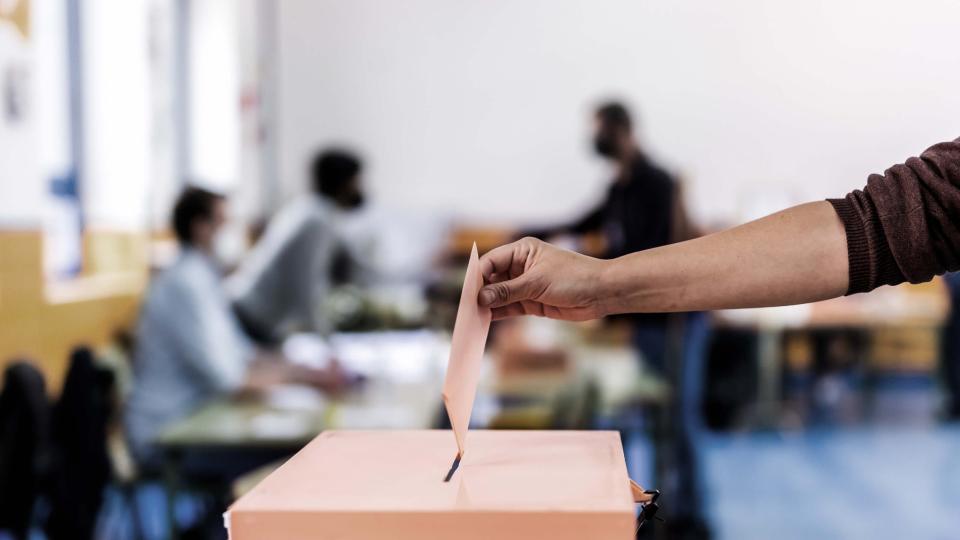
You walked out of a Virginia courtroom with a misdemeanor on your record and a question you might be afraid to ask out loud: Did I just lose my right to vote? You may also worry that if you guess wrong and vote anyway, you could be accused of voter fraud. That mix of confusion and fear is very common, especially because people hear so many different stories about what a conviction does to their civil rights.
For many Virginians, especially parents or spouses already dealing with divorce, custody, or support issues, the stakes feel even higher. Voting is not just a civic duty. It is part of how you protect your family’s future, your benefits, and your community. At the same time, you are trying to understand how this misdemeanor may affect your job, your reputation, and how a judge or the other parent might see you in a family law case.
Virginia law draws a sharp line between misdemeanors and felonies when it comes to voting rights, and that line matters more than most people realize. At Butler Moss O'Neal, PLC, we regularly look at how court outcomes in this region affect a client’s long-term rights, including how a criminal record might play into custody or support disputes. In this guide, we walk through how misdemeanors and voting really intersect in Virginia, where the real risks are, and when it makes sense to talk with a lawyer about the bigger picture, including related criminal defense concerns.
Before you accept a plea or make assumptions about your rights, speak with a Virginia attorney. Schedule a consultation online or call (540) 306-5780 to protect your future.
Do Misdemeanors Take Away Your Right To Vote In Virginia?
The starting point in Virginia is simple, even if the real-world situations are not. Loss of voting rights is tied to felony convictions, not to most misdemeanor convictions. If you have only a misdemeanor on your record and no prior felony conviction, that misdemeanor by itself typically does not take away your right to register and vote in Virginia elections.
The Virginia Constitution provides that people convicted of felonies lose certain civil rights, including the right to vote, unless those rights are later restored. It does not say that people convicted of misdemeanors lose those rights. That is a deliberate choice in the law. Legislators and courts treat felonies as a higher level of offense with broader consequences, which is why they trigger civil rights loss that misdemeanors do not.
Despite that, many people in the Fredericksburg and Rappahannock region stay away from the polls after any conviction because they are afraid of being accused of voting illegally. That fear is understandable, especially with high-profile news stories from around the country. If you have only a misdemeanor record and have never been convicted of a felony in Virginia or elsewhere, voting lawfully in Virginia elections does not amount to voter fraud.
The real danger is guessing about your status instead of confirming it. If you have any doubt about whether an old charge was a felony or whether your rights were ever restored, the safest path is to check your status through official Virginia resources and, when needed, have a Virginia attorney review your record. That is far better than letting fear silence you or taking a risky guess on Election Day.
How Virginia Law Treats Misdemeanors Versus Felonies For Voting
To understand why misdemeanors usually do not affect voting rights, it helps to look at how Virginia defines different levels of crimes. In general terms, a misdemeanor in Virginia is an offense that carries a maximum punishment of up to 12 months in jail and a fine. Common examples include many first-time DUI offenses, simple assault, or shoplifting below a certain dollar threshold. A felony is more serious and usually involves potential imprisonment for more than a year, plus heavier fines.
Virginia links the loss of civil rights, including the right to vote, to felony convictions. If you are convicted of a felony, you generally lose your right to vote in Virginia until those rights are restored by the Governor. That same felony conviction can also affect your ability to serve on a jury and to hold public office. In contrast, a conviction for a misdemeanor, even one that results in jail time, typically does not trigger automatic civil rights loss under the Virginia Constitution.
This difference between felonies and misdemeanors is not just academic. In real cases, prosecutors sometimes charge conduct as a felony, but the parties later agree to reduce the charge to a misdemeanor as part of a plea agreement. In those situations, avoiding a felony can be the difference between losing your right to vote and keeping it. The label attached to the conviction, and not just the facts behind it, is what controls your voting status.
At Butler Moss O'Neal, PLC, we work daily in courts throughout Fredericksburg and the surrounding counties and see how small word choices in a final order can have big long-term effects. While we focus our practice on family law, our litigation and negotiation work often involves clients who also have, or may face, criminal charges that intersect with divorce or custody proceedings. Part of effective planning in those situations is understanding how felony versus misdemeanor outcomes will look later, both for voting rights and in any future custody or support disputes.
Can You Vote While On Probation, In Jail, Or Owing Fines For A Misdemeanor?
People are often surprised to learn that being on probation or having a suspended sentence for a misdemeanor does not, by itself, take away their right to vote in Virginia. If your only convictions are misdemeanors, and you have no felony history, you remain eligible to register and vote, even while you are on probation or serving a suspended sentence. The law focuses on the type of conviction, not on the fact that you are under supervision.
Questions also come up about voting while in a local jail. In Virginia, many misdemeanors can result in a short jail sentence at a local facility. Legally, a person in jail for a misdemeanor, without any disqualifying felony conviction, can remain eligible to vote. The challenge is usually practical, not legal. Accessing absentee ballots, deadlines, and jail policies can make it hard to cast a ballot, but the underlying right to vote is not automatically gone simply because you are in a county or city jail on a misdemeanor sentence.
Unpaid fines and court costs create another layer of confusion. In some states and under some policy debates, people have heard that unpaid legal financial obligations can affect voting status. In Virginia, unpaid fines and costs from a misdemeanor case do not automatically remove your right to vote. They can, however, lead to other consequences, such as collection efforts, interest, or potential enforcement actions. Those are serious financial issues, but they are different from the loss of voting eligibility that comes with a felony conviction.
When we counsel clients whose families depend on their income and stability, we look beyond the immediate penalty and ask how conditions like probation, fines, and short jail terms will play out in everyday life. That includes practical questions about voting and whether a person can safely participate in elections without risking further legal trouble. Looking at the whole picture, not just the conviction label, is part of making informed decisions about both criminal exposure and family responsibilities.
What If You Have Both Felony & Misdemeanor Convictions?
Many people in Virginia have a mix of charges on their record. They may have older felony convictions as well as more recent misdemeanors. In that situation, it is the felony history, not the misdemeanors, that drives whether voting rights are currently lost. One felony conviction is enough to trigger disenfranchisement under Virginia law, even if you later have only misdemeanors on your record.
If you have a felony in your past and your civil rights have not been restored, you are not eligible to vote in Virginia, regardless of how many misdemeanors you do or do not have. On the other hand, if your felony rights have been restored through the Governor’s office, later misdemeanors typically do not undo that restoration or start the process over. The key questions are whether there was ever a felony conviction and whether rights were restored, not how many misdemeanors appear on your record.
Consider two common scenarios. In the first, someone is originally charged with a felony offense, but as part of a plea, the charge is reduced to a misdemeanor, and they are convicted only of that lesser offense. That person generally keeps their right to vote, because there is no felony conviction. In the second scenario, someone was convicted of a felony years ago and lost their voting rights, then later received a misdemeanor conviction for something unrelated. The newer misdemeanor does not cause the loss of rights, because that already happened with the earlier felony, and it does not automatically restore anything either.
Virginia’s civil rights restoration process is handled through the Governor’s office and has evolved, with different administrations taking different approaches. Some people with past felonies have already had their rights restored, while others are still in the process or have not yet applied. If you fall into this group, it is critical to check your current status through the Virginia Department of Elections and the Governor’s civil rights restoration resources, rather than relying on assumptions. Our attorneys often help clients in the Fredericksburg area understand how their criminal history fits within ongoing legal matters, so they can plan realistically for both civic participation and family obligations.
How A Misdemeanor Record Can Still Affect Your Life Even If You Can Vote
Even if your right to vote remains intact, a misdemeanor conviction can still change important parts of your life. Employers, landlords, and licensing boards often run background checks. A simple line on a report, such as a conviction for assault, shoplifting, or a domestic-related offense, can raise questions about trustworthiness, judgment, or safety. That, in turn, can affect your income, your housing choices, and the stability you can offer your family.
In Virginia family law cases, criminal records often come up when courts evaluate custody, visitation, and even support. Judges look closely at a parent’s ability to provide a safe and stable environment for a child. A single, older misdemeanor for a minor offense may carry less weight than a recent pattern of similar conduct, but it will still be part of the picture. Offenses that involve violence, threats, alcohol abuse, or children can receive particular attention when a court decides where a child will live or how parenting time should be structured.
These issues are even more complex for families with substantial assets, military or federal careers, or closely held businesses in the Fredericksburg region. A misdemeanor related to alcohol, dishonesty, or domestic conflict may trigger employment reviews, security clearance questions, or contractual problems. Those, in turn, can shape the financial side of a divorce or support case, from equitable distribution of retirement accounts to ongoing spousal or child support obligations.
Because Butler Moss O'Neal, PLC provides comprehensive family life-cycle support, we regularly work with clients who face both criminal and family law concerns at the same time. We look at how a misdemeanor may show up in custody arguments, how it might influence negotiations in mediation or collaborative law settings, and how to protect long-term financial interests, including federal and military pensions. Even when a misdemeanor does not cost you your vote, it can affect how others see you in court and in negotiations, so it deserves careful, strategic handling.
How To Confirm Your Voting Status & Protect Yourself From Mistakes
Instead of guessing about your eligibility, the safest and most empowering step is to confirm your status through official Virginia channels. The Virginia Department of Elections provides tools that allow you to check whether you are registered and, if so, where and how you can vote. Local voter registration offices in places like Fredericksburg and the surrounding counties can also answer questions about your registration record and provide forms if you need to register or update your information.
If you know you have a felony in your past, you will also want to check whether your civil rights have been restored. The Governor’s office maintains information about civil rights restoration, including how to see if you are on a restoration list and how to submit information if needed. Policies in this area have changed over time, so it is not safe to assume that what happened for a friend or family member five or ten years ago will match your situation today.
Relying on secondhand advice about voting status is risky. Well-meaning friends, family members, or social media posts may insist that any conviction means you cannot vote, or that a past restoration covers everything without regard to new charges. Neither blanket statement is reliable. Your history, your convictions, and the timing of any restoration all matter, and those details are specific to you.
When a client in our region is considering a plea or facing a new charge on top of a complicated history, we often encourage them to think beyond the immediate case. That includes asking how a conviction might line up with their rights as a voter, their role as a parent, and their financial security. While we do not control election policies, we can help you interpret how Virginia’s rules apply to your record so you are not forced to choose between silence and uncertainty at the polls.
When To Talk To A Lawyer About Misdemeanors, Voting Rights, & Your Family’s Future
Catching these issues early can make a real difference. If you are facing charges that could be prosecuted as either a misdemeanor or a felony, you should speak with a lawyer before you accept any plea. The difference between those labels can decide not only whether you keep your right to vote, but also how future judges and opposing parties view you in family law disputes. It is much easier to plan around known consequences than to undo an outcome that was not fully understood at the start.
Legal advice is also important if a co-parent or former spouse is using your criminal record as a tool in custody or support negotiations. Sometimes, threats about “losing your rights” or “never seeing your children again” are exaggerated or simply wrong. Other times, a pattern of behavior reflected in court records does present real risks in family court. An attorney who is focused on family law in Virginia can help you separate scare tactics from genuine legal concerns and chart a path that protects both your children and your standing.
In the Fredericksburg and Rappahannock region, Butler Moss O'Neal, PLC has built a practice centered on long-term family needs, from divorce and equitable distribution to custody, support, adoption, and name changes. Our three named partners provide direct, stable attention to these matters, drawing on more than a century of combined experience in Virginia courts. When criminal records, including misdemeanors, intersect with these family issues, we help clients weigh the legal, financial, and practical consequences together instead of treating each problem in isolation.
If you are unsure how a misdemeanor conviction affects your right to vote, your family’s future, or both, you do not have to sort through it alone. A focused, confidential conversation with counsel can give you a clearer picture of your options and help you protect what matters most in the years ahead.
Protect your rights, your record, and your family’s future. Schedule a confidential consultation online or call (540) 306-5780 today to discuss your situation and your options.